
For children's businesses
Web design for children's businesses where you're really selling confidence to parents.
The child uses the service. The parent makes the decision. A children's business website has to satisfy both — reassuring enough for a parent checking you out at 9pm, and clear enough about what the child will actually be doing.
Two audiences, one page
Nobody buys this for themselves.
The parent decides
Ages and stages, session times, pricing, availability, what happens if a child is anxious or new to the group, and how quickly a message gets answered. A parent scanning at speed needs these facts within a screen or two, not buried in a phone call they haven't made yet.
The child is the one who'll use it
Photos of children genuinely enjoying the activity, friendly rather than corporate language, and a sense of what a session actually feels like. It won't be the child reading the site, but it needs to look like somewhere they'd want to be.
Trust, without inventing it
Say what you can actually stand behind.
Parents want to know their child will be safe and well looked after, and plenty of children's businesses genuinely hold DBS checks, insurance, first-aid training or safeguarding policies worth stating plainly. Where you hold them, we'll put them where a worried parent will actually see them.
Where a credential doesn't exist yet, the honest answer is to leave it out rather than word around it. A vague nod to "safety" that can't be backed up is worse than no claim at all once a parent starts asking questions — and most will.
The same care applies to photography. Using a child's image needs permission from a parent, recorded properly, before it goes anywhere near the website.
Party hire
Soft Play Spectacular
Parents booking a party wanted three things fast: what's included, whether it'll fit their space, and whether the date is free. All three were arriving by message instead of being answered on the site.
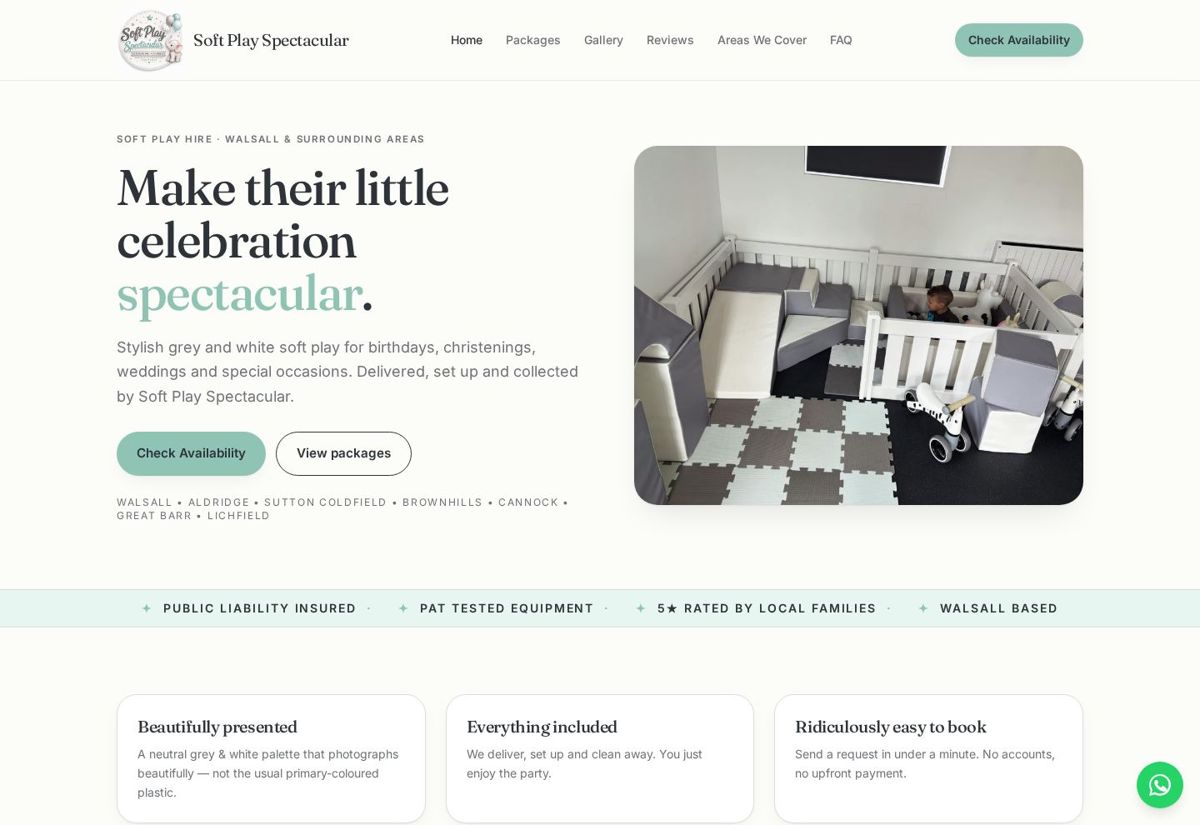
Package pages now set out what's included, the space required, and suitable ages, so a parent can rule packages in or out before contacting anyone. A date-led enquiry form collects venue and preferred dates in one pass, and an event gallery gives a real sense of what a party actually looks like.
Hire businesses live and die on availability being obvious — a parent who can't tell if a Saturday is free will simply try the next company on the list.
Education
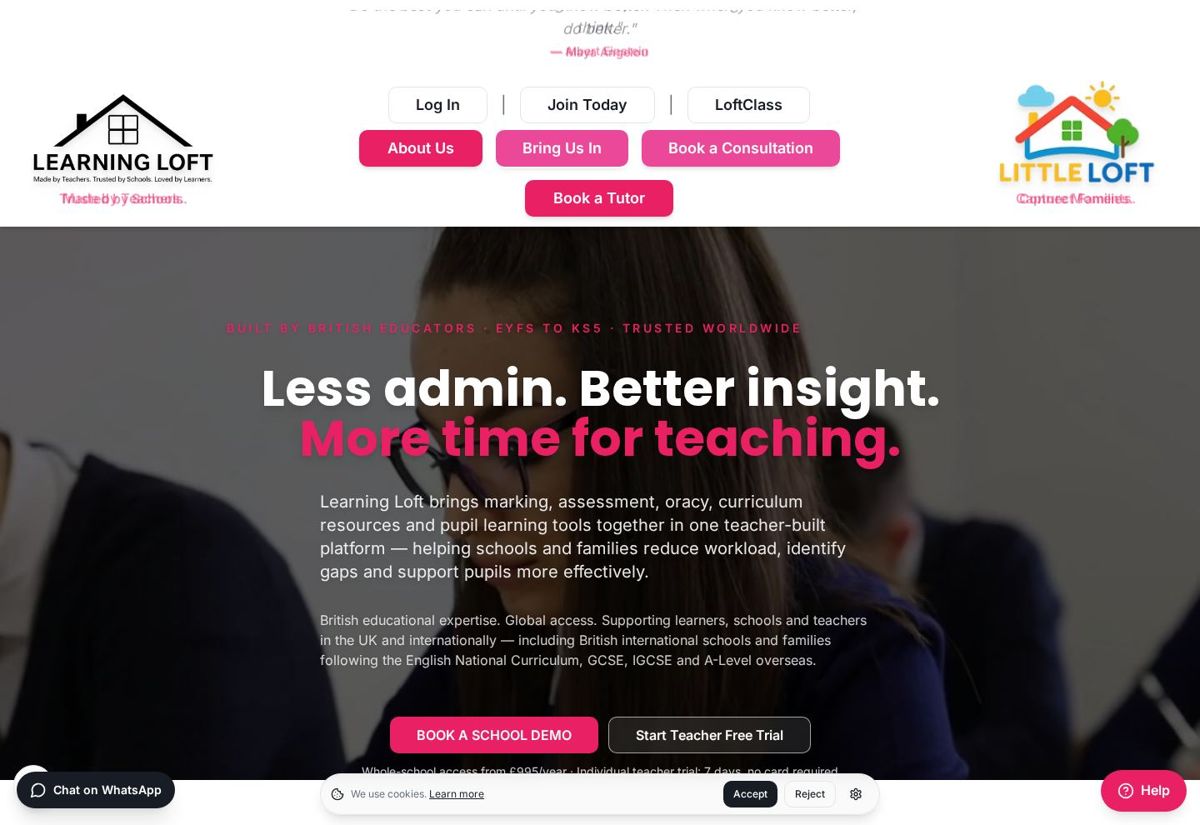
Learning Loft
A tutoring business needed parents to understand its offer in seconds — which subjects, which year groups, online or in person — without picking up the phone to ask.
Subjects and key stages are structured the way parents actually search for them, with individual pages for each core subject rather than one crowded list. The enquiry flow captures the child's year group and subject up front, so the first reply is useful rather than a request for basics.
Session format — online or in person — is explained clearly, because it changes how a parent plans the week around it.
Read the full Learning Loft case study or see web design for education businesses.
Coaching
Archer Football Coaching
Sessions were filling through word of mouth and social posts that disappeared within a day — there was no permanent home for schedules, venues or sign-ups.
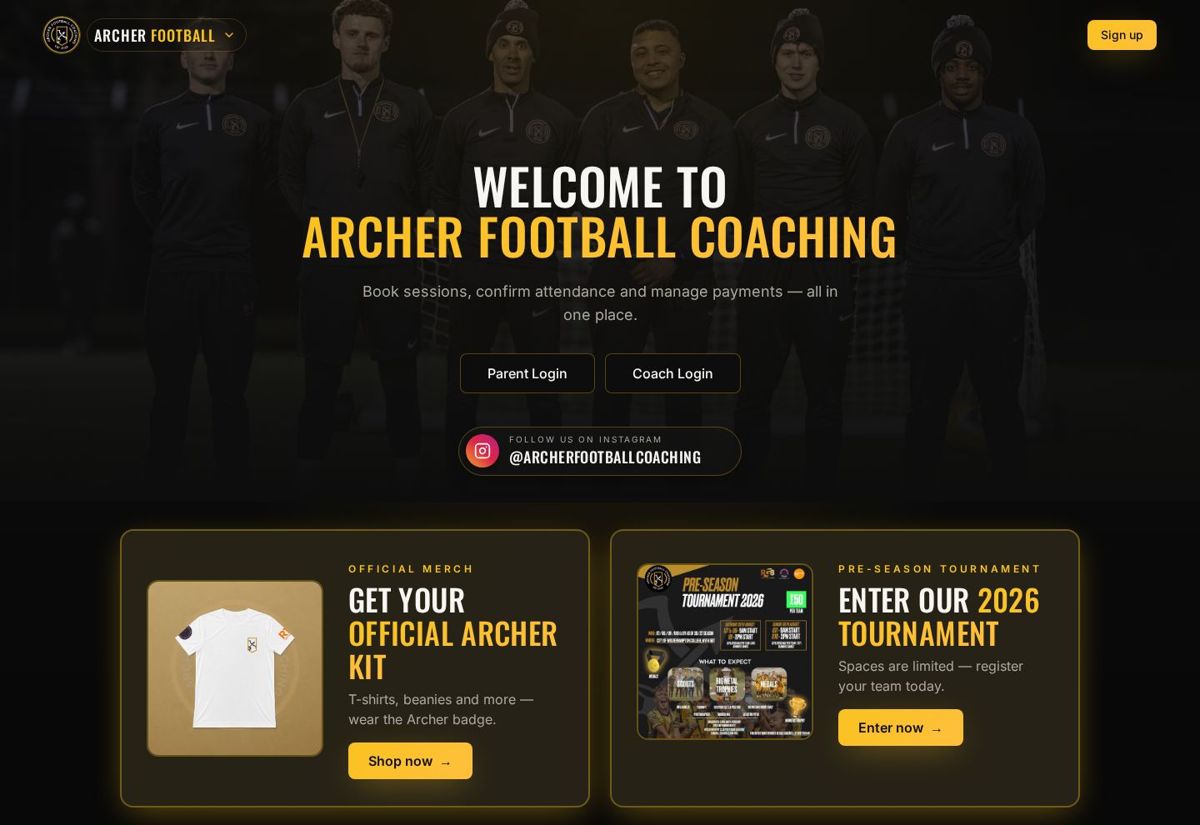
Sessions, camps and one-to-one coaching now sit on their own pages with age groups, venues and session times set out clearly, so a parent can see exactly what fits their child's age before registering.
A registration flow suited to parents booking for a child replaces the old back-and-forth, and the structure handles seasonal holiday camps without a rebuild every term.
Read the full Archer Football Coaching case study or see web design for coaches.
One structure doesn't fit all three
Hire, education and coaching need different bones.
Party hire is date-driven: the whole site has to answer "is my day free" before anything else. Education is subject-and-level driven: parents are matching their child's needs against what's on offer. Coaching is age-and-term driven: sessions change through the year and registration has to keep up without a rebuild.
Three genuinely different businesses, three different site structures — built around how each one actually runs, not a single children's-business template.
The 9pm phone test
Picture a parent, on a sofa, after the kids are in bed.
- Clear age ranges and what's suitable for each
- Activities or sessions described plainly, not in jargon
- Locations, venues and travel/collection details where relevant
- Availability — dates, terms or spaces left
- Pricing and package information, where the business is comfortable showing it
- A straightforward enquiry or booking route
- Photography used with proper parental permission
- FAQs that head off the questions parents always ask
That's most of your traffic. A site that makes them scroll, squint or wait for a slow image to load loses them to the next tab. See the broader thinking on web design for small business.
Children's business questions
Common questions from children's businesses
Full costs are on pricing, and you can see how this fits alongside other sectors on industries.
Next step
Got a vision?
Let's build the venture.
Tell us what your business does and what you need the website to achieve. We'll come back to you personally with honest thoughts — and a clear proposal if it's a good fit.